
Blog
Dental hygiene tips for healthy teeth & gums
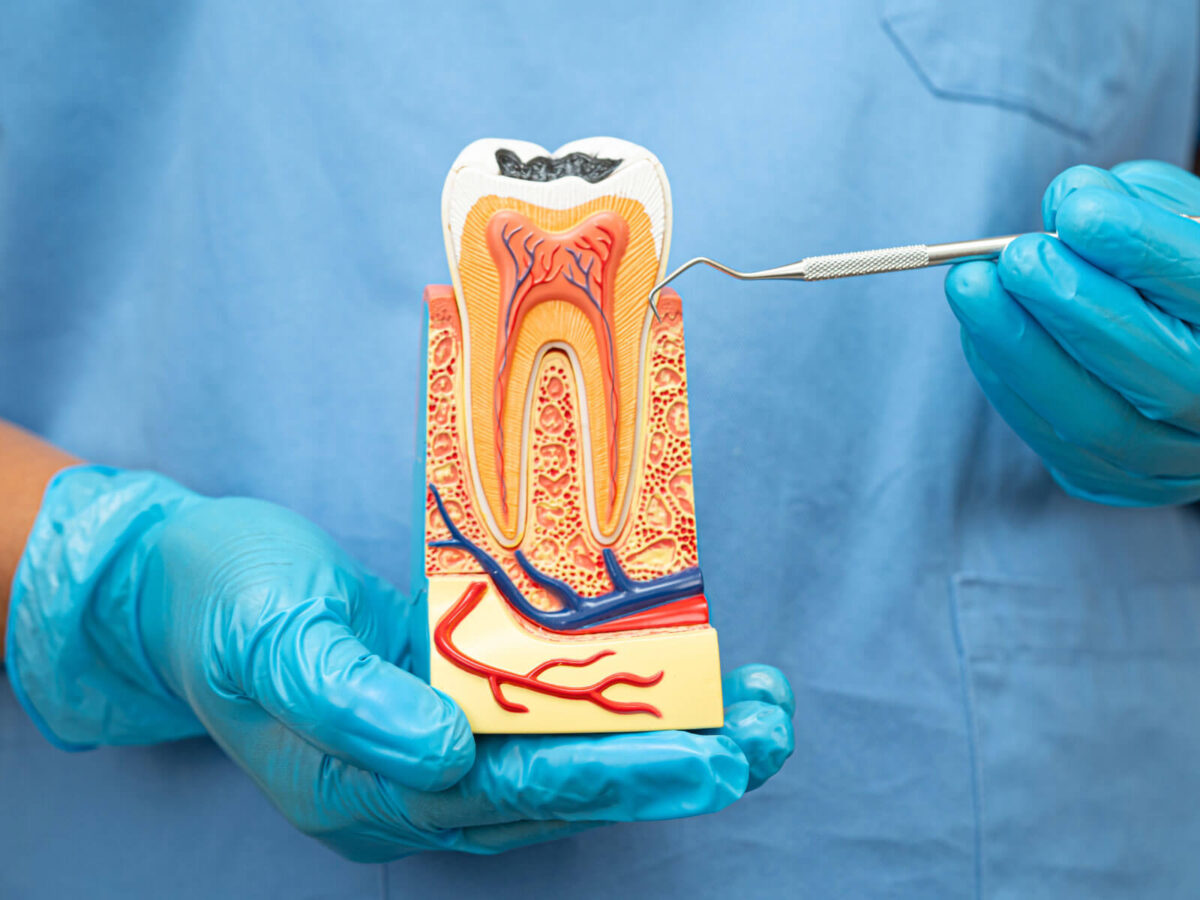
Top Myths About Root Canals Debunked: Pain, Illness Claims, and Extraction Comparisons
Root canals rank among the most misunderstood procedures in dentistry, and patients pay for that confusion in real ways. Some delay treatment for months over claims that fall apart under basic research, long enough in a few cases that a saveable tooth stops being saveable.
Sorting fact from reputation matters here more than in most dental topics. Some myths about root canal treatment trace to a single doctor’s discredited theory from the early 1900s. Others just come from a time when the numbing didn’t work nearly as well as it does today.
Myth 1: Root Canals Cause Serious Pain
Actually, the opposite, per the AAE’s own patient survey, which found root canal patients six times more likely to call the procedure painless than patients who’d had a tooth pulled. What sticks in people’s memory as “root canal pain” is usually the infected tooth itself, already throbbing long before anyone picked up a drill.
A Swedish cohort study tracking patients for seven to nine years found something worth including. Seventy-six percent recalled the original procedure as painful, yet only 63.5 percent still had pain at follow-up, most of it mild. Memory of the whole ordeal, sick tooth included, isn’t the same measurement as how the treatment actually felt in the moment, one of the more persistent myths about root canal pain that doesn’t hold up once the data gets separated from the memory.
Myth 2: A Root Canal Can Give You Cancer
Traceable to one specific source. Doctor Weston A. Price proposed a focal infection theory in the early 1900s, claiming bacteria trapped inside root-canaled teeth caused disease throughout the body. His evidence came from implanting extracted teeth into rabbits and reporting that the animals developed whatever condition the human patient had.
Discredited decades ago, resurrected by a 2019 documentary, and taken seriously enough by the public that the AAE, ADA, and American Association of Dental Research jointly asked streaming platforms to pull the film.
The actual data runs in the opposite direction. A 2013 study in JAMA Otolaryngology-Head & Neck Surgery tracked patient dental histories and found no cancer link, with people who’d had multiple root canals actually showing a 45 percent lower risk of head and neck cancer.
Myth 3: Pulling the Tooth Is Much Safer
The AAE calls extraction the more traumatic of the two procedures, with a higher chance of letting bacteria into the bloodstream than a properly done root canal.
There’s a real complication worth including here, though. A PMC study comparing quality of life after root canal treatment versus extraction found that patients who had extractions actually scored better on pain, discomfort, and overall quality of life at six and twelve months out.
That doesn’t make extraction automatically the smarter choice. Whatever replaces the missing tooth, an implant or a bridge, costs more than the root canal would have and rarely functions quite like the original, one of the more complicated myths about root canal treatment to fully debunk since the data itself is genuinely mixed.
Myth 4: You Don’t Need to Take Care of a Root Canal Tooth
The nerve gets removed, which is where “dead tooth” language comes from. The root, the surrounding ligament, the bone holding everything in place, none of that goes anywhere. Same brushing, same flossing, same checkups as before.
A crown usually goes on top afterward. Without the nerve’s feedback and moisture, the tooth fractures more easily than it used to. Skip the crown, skip the hygiene, and a well-done root canal fails years down the line, not because the treatment was flawed but because the aftercare stopped, one of the quieter myths about root canal care that catches people off guard well after the appointment’s over.
Myth 5: A Root Canal Can Give You Heart Disease
Same playbook as the cancer myth, different organ. A study out of the PAROKRANK research followed hundreds of heart attack patients and controls and found no link between root canal history and future cardiovascular events. One study cited in that same paper went further, finding root-filled teeth tied to lower odds of coronary artery disease, not higher.
An untreated infection is what actually raises risk. A root canal is what stops it.
Myth 6: Pain After a Root Canal? Means It Didn’t Work
A little soreness afterward is normal. That’s it. Ibuprofen handles it, and it fades within a couple of days.
Getting worse instead of better is the actual red flag. Swelling too. Or an ache that shows up weeks later out of nowhere. That’s when you call. Two days of mild soreness that’s already easing up doesn’t need a phone call at all.
Myth 7: No Pain Means No Root Canal Needed
Plenty of infected teeth stay silent. A nerve can die slowly enough that pain never really registers, especially once the body’s walled off the infection on its own. Dentists find abscesses on routine X-rays all the time in patients who’ve felt nothing.
Waiting for pain means waiting until damage has already started. Regular checkups exist partly to catch exactly this, a quiet problem before it turns loud, and it’s one of the more common myths about root canal treatment that leads people to skip checkups they don’t think they need.
Myth 8: Root Canals Take Multiple, Drawn-Out Visits
Usually just one or two. The ADA’s own MouthHealthy resource states that root canal treatment usually takes one or two office visits to complete, with each appointment typically running somewhere between 30 and 90 minutes depending on the tooth.
Front teeth with a single canal move fastest. Molars have up to four canals, which pushes the time up and makes a second visit more likely.
That second visit isn’t a sign anything’s wrong. It usually just means the infection needed medication sitting inside the tooth for a week or two before the canals get permanently sealed, or that a crown needs to be placed separately once the tooth has settled.
Either way, the image of weeks of repeated drilling doesn’t match how the procedure actually runs for most patients, one of the more exaggerated myths about root canal treatment length.
Myth 9: A Round of Antibiotics Can Fix What a Root Canal Would
A tempting shortcut, and one worth avoiding. The ADA’s guidance on antibiotics for dental pain and swelling says dentists should prioritize actual treatment, root canal therapy, pulpotomy, incision and drainage, over antibiotics for localized infections. Antibiotics only come into play once there’s fever or spreading swelling, signs the infection’s gone systemic.
The problem is the blood supply. A tooth losing its blood supply loses the antibiotics’ access route too. Pain can quiet down for a bit, but the bacteria inside the tooth don’t actually go anywhere, and the whole thing tends to come roaring back once the prescription’s finished.
FAQ
Did root canals really used to hurt more, decades ago?
Older tools, older anesthesia, both worse at the job than what’s used now. Probably where most of the reputation comes from in the first place.
Can an old root canal get reinfected years later?
It can. But it’s rare. A cracked seal or a new cavity forming right at the edge of the restoration, that’s usually how bacteria find their way back in.
Do insurance companies consider root canals elective?
Most plans treat them as necessary, not optional, since skipping one usually means extraction or a worsening infection down the line. Actual coverage still depends on the plan.
Would extraction ever actually beat a root canal?
Sometimes, yes, mainly when there’s not enough healthy tooth structure left to build a restoration on top of. Extraction isn’t dangerous. It’s just the second choice whenever saving the original tooth is still realistic.
Conclusion
Most of what circulates about myths about root canal treatment doesn’t survive contact with the actual research. The illness claims trace back to one discredited theory from a century ago. The pain reputation traces back to how the procedure used to feel before anesthesia improved. Neither holds up now.
If a root canal’s on the table and something read online made it sound worse than it is, bring that directly to the dentist or endodontist doing the work. They’ve heard every version of these myths, and they can speak to the specific tooth, not what a forum post assumes about all of them.

