
Blog
Dental hygiene tips for healthy teeth & gums
Root Canal Treatment: Step-by-Step Guide to What to Expect
Nearly all the dread around this procedure comes from not being able to see what’s happening. You’re lying back with a sheet of rubber over your mouth, listening to sounds you can’t interpret, and your imagination fills the gap.
I’ve sat in that chair, and the root canal treatment steps are methodical, mostly uneventful from where you’re lying. You’re numb, you’re still, and the actually unpleasant part was the week of pain that got you into the chair in the first place.
So here’s the whole thing in order, plus what the days afterward feel like.
TL;DR
- Most of the appointment is spent numbing you properly and keeping the tooth dry and isolated. The actual disinfecting and sealing takes less time than people assume once that part’s done.
- One or two appointments cover most teeth, usually around an hour to ninety minutes each.
- I’ve seen two to four days of soreness be totally normal. Pain that climbs instead of fading is not.
- Back teeth need a crown afterward, and skipping it is what kills otherwise successful root canal treatment.
- Survival is high, with about 97% of treated teeth still in the mouth ten years later.
What Is a Root Canal Trying to Fix
Inside every tooth sits a thin chamber of nerve and blood vessels. Bacteria get in there through a crack or deep decay, and your body’s basically trapped trying to fight them off. That pinhole at the root tip is the only way blood reaches the area. Once swelling starts inside that rigid space, it doesn’t take long for circulation to cut off.
Once the tissue’s dead, infection doesn’t stay put. It pushes out through the root tip and into the bone, which is where an abscess forms.
The procedure just clears out what’s dead and seals the space so bacteria can’t get back in.
What Are the Root Canal Treatment Steps
Testing and X-rays. It starts with cold on the tooth, a tap to check the tissue beyond the root, and images to map the canals before anyone touches anything.
Anesthetic. The tooth and everything around it go numb, and this is usually the only part patients remember worrying about.
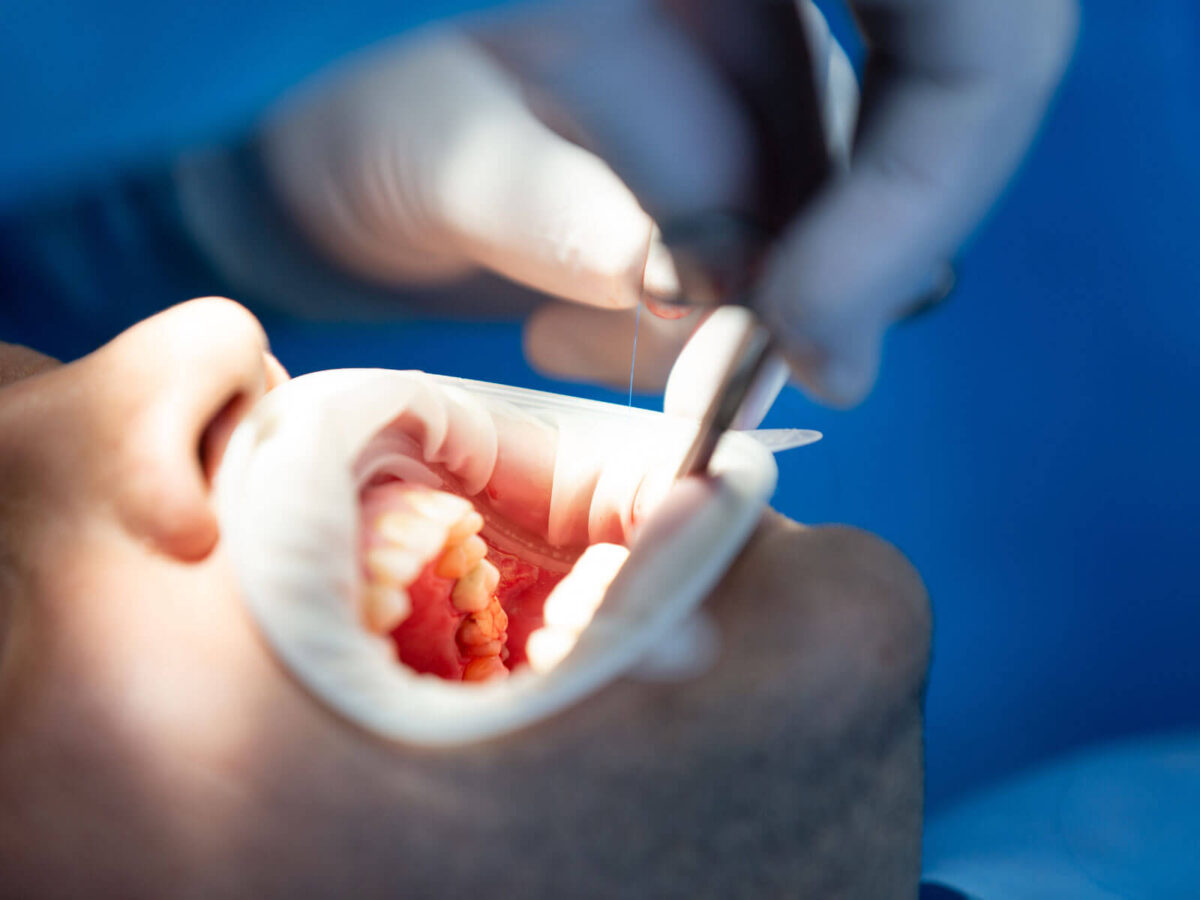
The rubber dam. A sheet clamped over the tooth to keep it dry and sealed off from your saliva.
Access. A small opening drilled through the top into the pulp chamber.
Cleaning and shaping. Fine files run down the length of each canal, with disinfectant flushed between them. This is the longest of the root canal treatment steps.
Filling. Gutta-percha and sealer get packed into the space, then the opening is closed.
The restoration. A permanent filling, or for most back teeth, a crown.
What’s Actually Happening During Cleaning
Your dentist works down each canal with very fine flexible files, usually rotary, removing pulp tissue as they go.
Between files, the canal gets flushed with sodium hypochlorite. I’d argue this does more of the real disinfection than the instruments do. Files shape the canal, the irrigant reaches into the shaped space, and that’s what actually kills what’s in there.
An apex locator measures exactly where the root ends. It stops anything from getting pushed past it into the bone. That single measurement is where most of the appointment time actually goes.
How Does the Canal Get Sealed
Once everything is clean, dry, and shaped, gutta-percha goes in, held with a sealer cement.
Your dentist is aiming for zero gaps in that fill. Leave a void anywhere, and bacteria have a place to regroup down the line. A final X-ray confirms the fill runs the full length without going beyond it.
I’d call this one of the more decisive root canal treatment steps: get the seal wrong and the rest of the procedure doesn’t hold.
Tooth Pain That Needs Answers?
Get it diagnosed and find out whether the tooth can be saved.
Why Do You Need a Crown Afterward
Your tooth has lost its blood supply and had material taken out of its middle. The remaining walls are thinner and more brittle than before treatment.
Molars take a heavy chewing load, and a crown or onlay covers the cusps to stop the tooth from splitting. I’ve read plenty of case series where the root canal itself held up fine for years, and the tooth was still lost. The missing crown is usually the culprit.
Front teeth sometimes get away with a well-built filling, depending on how much structure is left. Either way, I’d count this as one of the root canal treatment steps people skip at their own risk.
How Long Will You Be in the Chair
An hour to ninety minutes for a single-canal tooth. Add extra canals, and you’re adding time. Three or four in a molar can push a single visit toward two hours, and some dentists would rather split that across two shorter appointments.
If there’s active infection, expect your dentist to pack medication into the canal and send you home for a week or two before finishing up. I’ve seen this stretch out one of the root canal treatment steps more than people expect going in.
What Is the Root Canal Recovery Time
Two to four days of tenderness for most people, mainly when you bite down on that side.
The numbness itself lasts two to four hours, and I always warn patients this is when they end up biting their own cheek without noticing. Stick to the other side until feeling returns.
Most people are back at work the same day. Root canal recovery time isn’t really comparable to an extraction. There’s no socket healing, no missing tooth to work around.
Is Root Canal Pain After Procedure Normal
Some is expected, and what matters is the direction it’s moving. Dull and fading is fine. Sharp and building is not.
I always point people to a clinical study that recorded post-obturation pain one day afterward in 24.7% of single-visit cases against 33.5% of multiple-visit ones{target=”_blank” rel=”noopener noreferrer”}. By the seven-day mark, the same study found those numbers had dropped to 4.0% and 5.3%.
Ibuprofen deals with most of it. If you’re still reaching for painkillers around the clock on day four, that’s a phone call rather than a wait-and-see, no matter what the usual root canal pain after procedure timeline says.
What Should You Eat for the First Few Days
Soft things, chewed on the other side, for a day or two.
I’d be extra careful if you’ve got a temporary filling in. They crack far more easily than a permanent restoration, and an exposed canal at this stage undoes the work.
Once your crown is on, the tooth goes back to normal service with no restrictions on the root canal treatment steps you followed to get there.
When Should You Ring the Practice
Pain climbing after day three. Facial or gum swelling. A bad taste that turns up suddenly, especially with a temporary filling in place.
A loose or lost temporary is worth a call too. It’s a quick fix, and leaving an open canal for a fortnight isn’t. I’d rather patients call over any of these than second-guess it.
FAQ
Does it hurt during the procedure?
It shouldn’t. Properly numbed, it feels much like having a large filling placed.
Can I drive home afterward?
Yes, unless you’ve had sedation. Local anesthetic doesn’t affect driving.
Will the tooth go dark?
Occasionally, and mostly front teeth. I’ve seen internal whitening correct it when it happens.
Do I really need the crown?
On a molar, yes. That’s what stops it splitting under normal chewing, and it’s one of the last root canal treatment steps people are tempted to skip.
Conclusion
The procedure has a worse reputation than it deserves, largely inherited from an era before rotary instruments and better anesthetic. Long, yes. Painful, generally not.
What decides whether it lasts is mostly what happens afterward. Get the permanent restoration fitted rather than living on a temporary for eight months, and keep the gums around that tooth in good shape.
I’d flag one thing specifically: a tooth that’s been flaring up and settling down for months, especially one that hurt badly and then went quiet. That’s the kind of history I’d want mentioned before the root canal treatment steps even start.
Find Out If Your Tooth Can Be Saved
Book an assessment and get a clear plan before the pain returns.

