
Blog
Dental hygiene tips for healthy teeth & gums
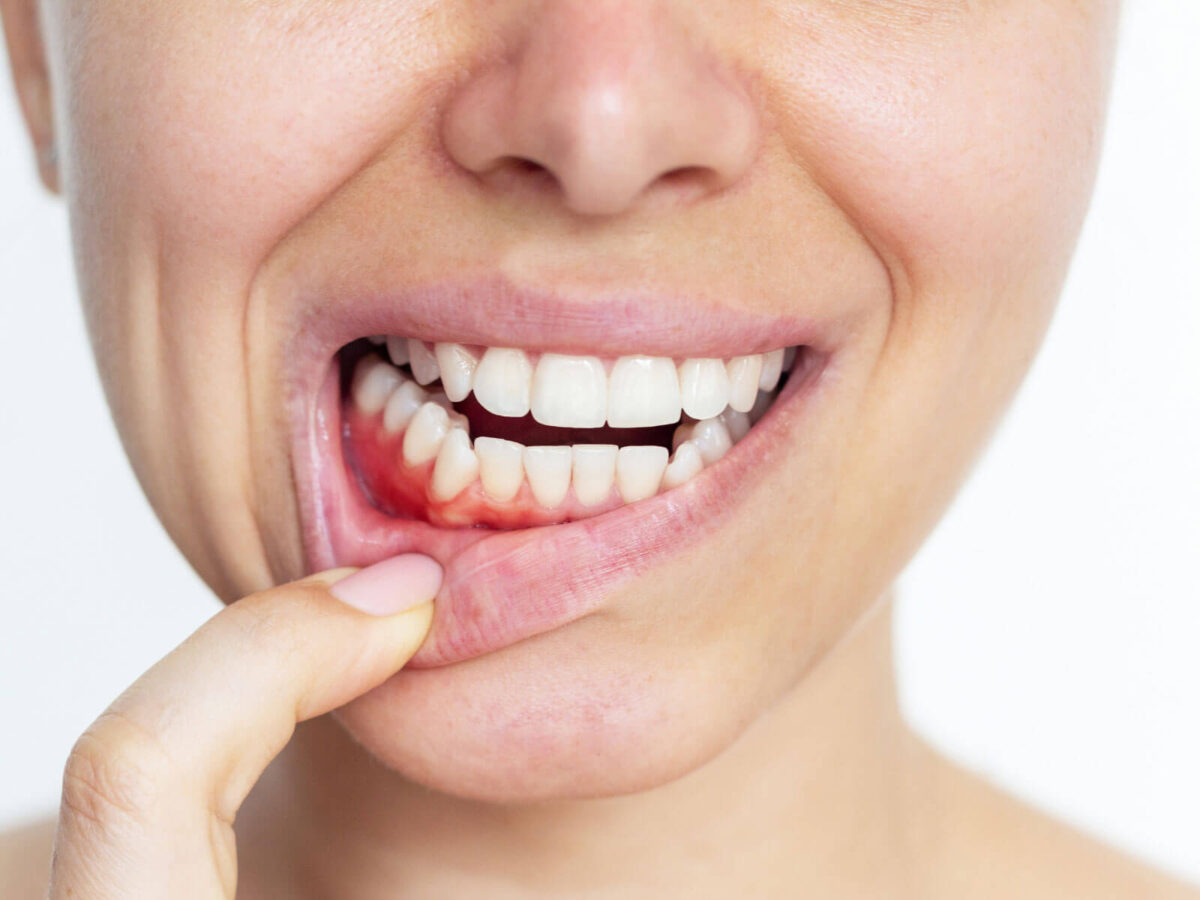
Bony Gum Protrusion: When a Bump in Your Mouth Needs Attention
I found a bony gum protrusion with my tongue one evening. A hard lump on the roof of my mouth, right in the middle, smooth and completely immovable. Nothing hurt. The firmness of it, bone-hard rather than soft tissue, was enough to send me into a search spiral that lasted most of the night.
By the next morning I had convinced myself of several things, none of them accurate. What I had was a torus palatinus. A completely benign growth that somewhere between 20% and 30% of the population has, most of them unaware of it until they happen to notice it.
A five-minute dental appointment could have settled it immediately. I spent two weeks not making that appointment.
TL;DR
- Most bony gum protrusions turn out to be a torus. The patients who come in worried about one almost always leave the same appointment relieved.
- Torus palatinus grows along the midline of the hard palate. I found mine with my tongue and spent two weeks convinced it was something it wasn’t.
- Mandibular tori grow on the tongue side of the lower jaw, usually near the premolars, and tend to show up on both sides.
- Neither type needs treatment unless it gets in the way of function or denture fitting.
- Bone growth in the mouth treatment is surgical removal, and it’s only recommended when there’s a clinical reason to do it.
What Is a Bony Gum Protrusion
A hard, immovable lump covered by normal-looking tissue somewhere in the mouth is almost always a torus. The less common possibility is something else that needs an exam to identify, which is why I made the appointment when I found mine.
Tori are benign bony outgrowths, called exostoses, that develop from the cortical bone of the jaw. They grow slowly, sometimes over decades, and are covered by a thin layer of normal oral mucosa. They don’t ulcerate, don’t change color, and feel no different from the surrounding tissue apart from the underlying firmness.
The cause isn’t fully established, but genetic predisposition combined with occlusal stress – the forces generated by chewing and grinding – appears to be the most consistent explanation in the literature. Nothing a person did caused it.
What Is Torus Palatinus
When I examine a palatal torus, the first thing I look at is where it sits. If it runs down the center of the roof of the mouth, that midline position is usually enough to tell me what I’m dealing with before I even probe it.
Size varies considerably. Some are small and smooth enough that the tongue skims right past them. Others are large enough to occupy a significant portion of the palate, sometimes with a lobulated or irregular surface. The tissue covering them is normal but thin, which makes them prone to ulceration if irritated by food or dental appliances.
A study published by the NIH found torus palatinus in 20% to 35% of the general population depending on the group examined, with higher rates in women than men and significant variation across ethnic groups. Most people who have one have no idea until they find it by accident.
What Are Mandibular Tori
Mandibular tori grow on the tongue side of the lower jaw, typically near the premolars, and usually show up on both sides at once. I tell patients that the symmetry is the reassuring part. Two matching hard bumps on either side of the lower jaw are exactly how tori present.
They feel smooth and firm along the inner gum line. Most people who have them don’t know until they run their tongue along that surface and notice something that wasn’t there before, or so they think.
Prevalence runs lower than palatal tori, roughly 5% to 10% in most studies. Most are slow-growing and cause no problems. They only become relevant when they’re large enough to interfere with tongue movement, speech, or a lower denture.
How Does a Torus Differ From Something That Needs Attention?
A dental exam answers this quickly, which is the part I wish I’d known sooner.
Tori are hard, covered by normal tissue, located in characteristic positions, and either stable or very slowly growing. They don’t hurt unless something physically irritates them.
What shifts my concern is different in character. A soft lump rather than a hard one. Something that’s grown noticeably over weeks rather than years. A growth that ulcerates without trauma and doesn’t heal. Asymmetric presentation in a location that doesn’t match a torus pattern. Pain at rest.
The Mayo Clinic notes that oral lesions that don’t resolve within two weeks should be evaluated. That’s a reasonable threshold for anything in the mouth that doesn’t fit a clearly benign pattern. A torus that checks all the right boxes – hard, midline or bilateral, slow-growing, normal tissue covering – takes minutes to confirm.
Not Sure What That Lump Is?
A quick exam separates a benign torus from something that needs further evaluation.
What Does Surgical Removal Involve
Torus removal is done under local anesthesia. The tissue over the growth is incised and reflected, the bone is reduced with a surgical handpiece and chisels, and the tissue is sutured back into place. Most patients are surprised by how routine the procedure is once they’ve been worrying about the lump for weeks.
Recovery depends on the size of what’s removed. Palatal torus removal tends to be more uncomfortable than mandibular tori removal because the palatal tissue is thin and hard to protect during healing. A surgical stent, a custom-made appliance that fits over the surgical site, is sometimes placed to shield the palate while it heals.
Cleveland Clinic notes that torus removal is a routine oral surgery procedure with a predictable recovery when performed for the right reasons. Most patients manage with over-the-counter pain relief and a soft diet for one to two weeks. Removing a torus that’s causing problems is a predictable procedure. Removing one that isn’t is a decision worth thinking through carefully.
FAQ
What is a bony gum protrusion?
Most of the time it’s a torus, a benign bony growth that a significant portion of the population has without knowing it. Hard, covered by normal tissue, slow-growing. The thing I spent two weeks convinced was something serious turned out to be exactly this.
What is torus palatinus?
It grows right down the center of the roof of the mouth. Most people find it by accident with their tongue, come in worried, and leave relieved.
What are mandibular tori?
Benign bony growths on the tongue side of the lower jaw, usually near the premolars, and typically on both sides at once. I only recommend treatment when they’re large enough to cause real problems with function, hygiene, or denture placement.
When does bone growth in mouth treatment become necessary?
When the torus interferes with swallowing, speech, or denture fitting. When repeated trauma causes ulceration that won’t heal. When size creates hygiene problems. Not simply because it exists.
Conclusion
Finding a hard lump in the mouth and spending two weeks convinced it’s something serious is more common than people admit. I did it myself. What I didn’t know was that a bony gum protrusion is a normal anatomical variant that a significant portion of the population has quietly carried around for years.
Torus palatinus and mandibular tori are the most common explanations for a hard, immovable lump in a predictable location. Both are benign and slow-growing, and neither needs bone growth in mouth treatment unless there’s a functional reason to act.
What they do need is a dental appointment, because not everything that feels like a torus is one. If you’re in Calallen and you’ve found something hard in your mouth that you haven’t had looked at, book that appointment. Five minutes of examination is a lot faster than two weeks of searching the internet.
Found Something Hard in Your Mouth?
An exam identifies it and tells you whether it needs any attention at all.

